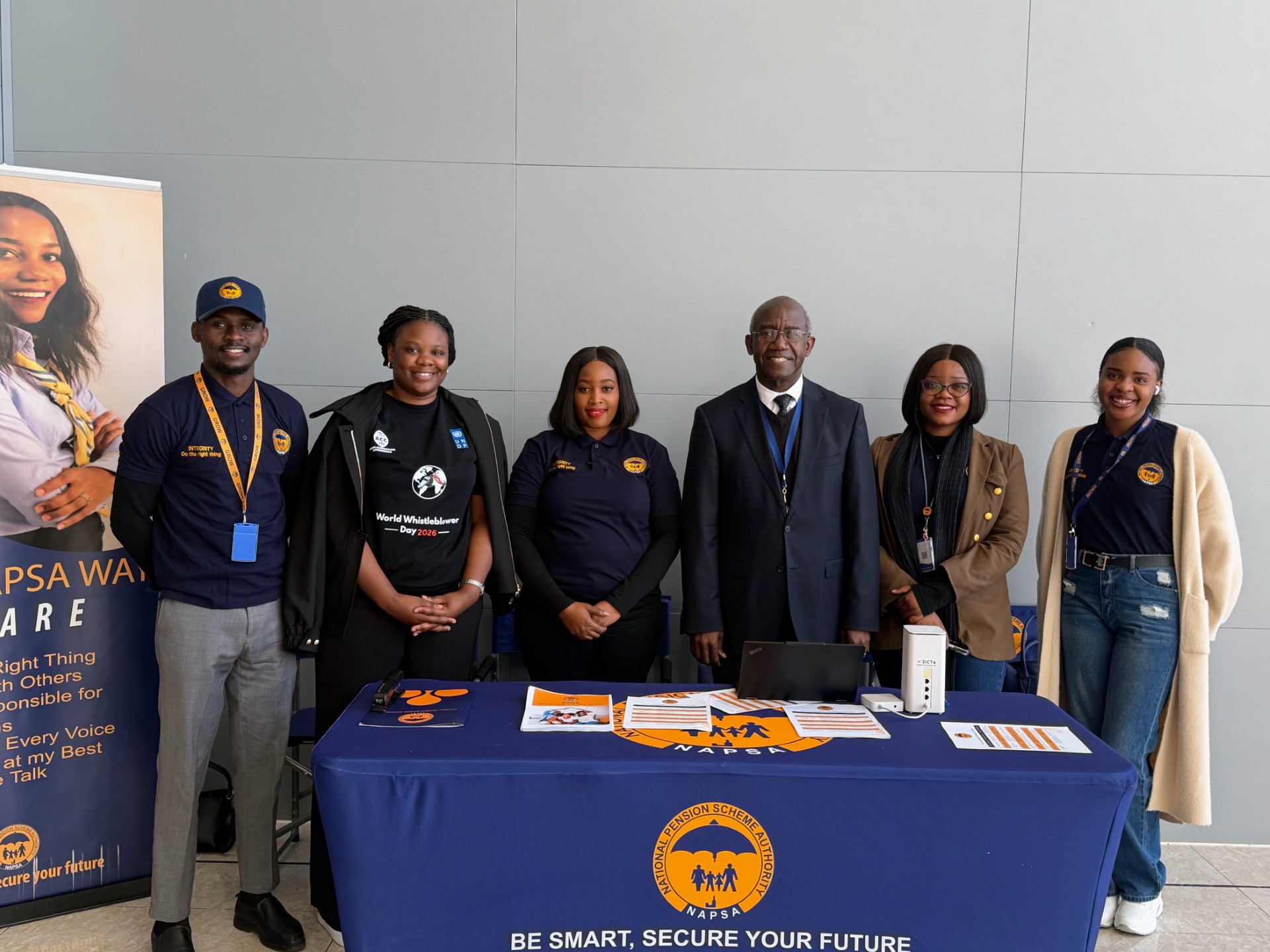
NAPSA Strengthens Engagement with Chinese Business Community to Promote Social Security Compliance and Understanding
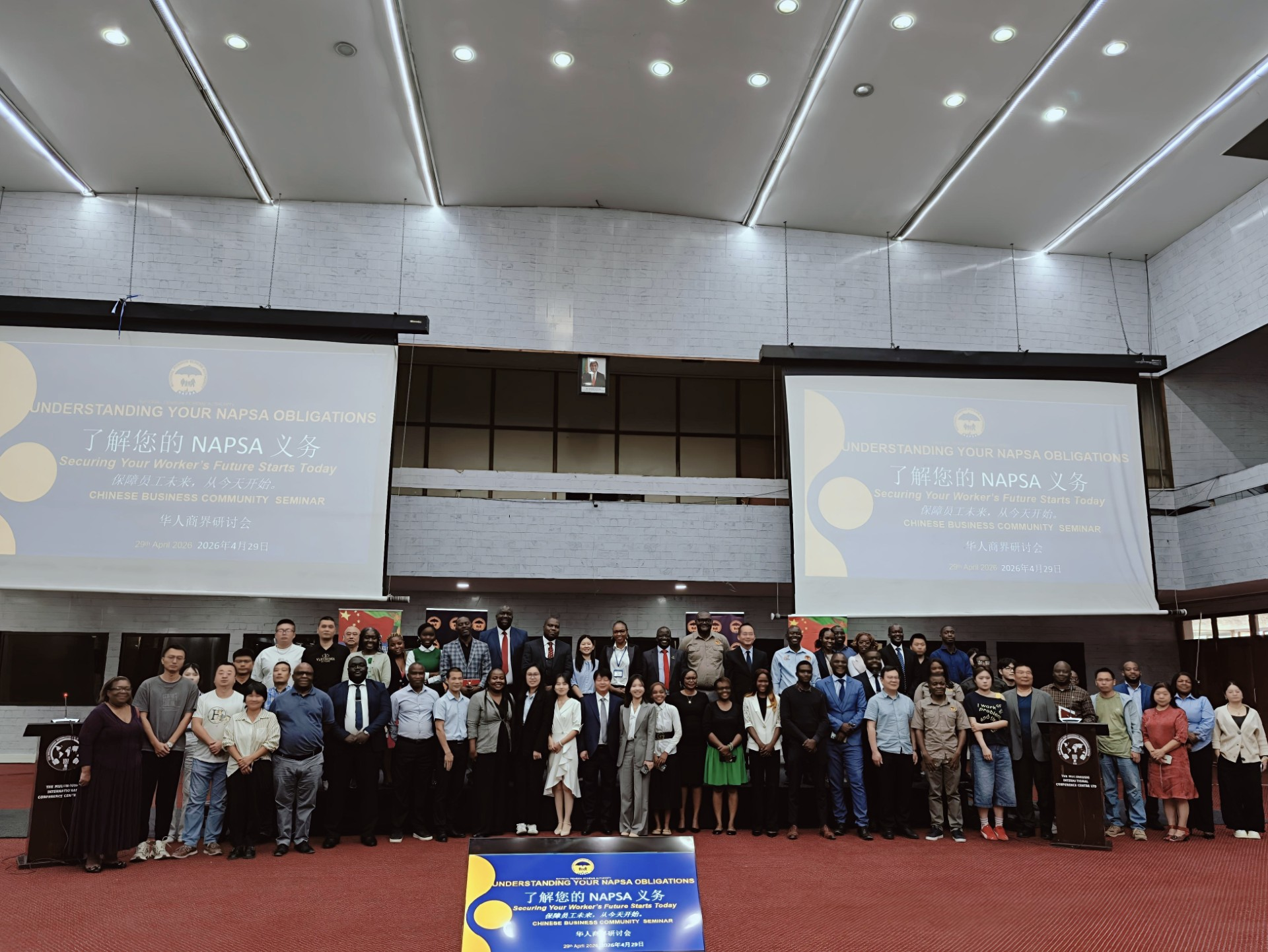
The National Pension Scheme Authority (NAPSA) has reaffirmed its commitment to deepening collaboration with the Chinese business community in Zambia, with a focus on enhancing social security compliance, strengthening mutual understanding, and supporting sustainable economic development.
This was highlighted during the Chinese Business Community Seminar held in Lusaka, where NAPSA was represented by the Regional Manager – South, Mr. Simuwana Mudenda, who delivered remarks on behalf of the Director General, Mr. Muyangwa Muyangwa.
In the remarks, NAPSA expressed appreciation for the significant contribution of the Chinese business community to Zambia’s economic growth. The Authority noted that Chinese-owned enterprises continue to play a key role in job creation, infrastructure development, skills transfer, and broader industrial expansion.
NAPSA emphasised that its engagement with employers, including the Chinese business community, is anchored on partnership and collaboration, rather than enforcement alone.
A key message of the seminar was the clarification that social security contributions are not a tax, but a legal obligation and a protection mechanism for workers. The Authority underscored that contributions made to NAPSA provide long-term security for employees by safeguarding income during retirement and other life contingencies.
The engagement also recognised the challenges some businesses face in understanding Zambia’s social security framework, particularly where differences exist between international systems. NAPSA noted that such variations can sometimes lead to misunderstandings regarding contribution requirements and compliance obligations.
In addition, communication and knowledge gaps were identified as contributing factors to compliance challenges, with language barriers and misinterpretation of requirements highlighted. In response, NAPSA reiterated its commitment to strengthening stakeholder engagement, improving communication channels, and providing clearer guidance to employers.
The Authority further highlighted operational challenges affecting compliance in some organisations, including reliance on manual HR and payroll systems, limited integration between human resource and finance functions, high employee turnover, and incomplete employee records. Employers were encouraged to strengthen their internal systems to improve efficiency and ensure full compliance.
Despite these challenges, the seminar was described as a constructive and impactful platform that strengthened dialogue between NAPSA and the Chinese business community. Stakeholders welcomed the engagement as an important step towards building trust, improving understanding of social security obligations, and fostering a more supportive compliance environment.
NAPSA reaffirmed its commitment to continued engagement with all stakeholders, noting that such partnerships are critical in enhancing compliance levels, protecting workers’ rights, and contributing to Zambia’s broader economic development agenda.
Recent